As an Amazon Associate, we earn from qualifying purchases. Some links on this site are affiliate links at no extra cost to you. Our recommendations are based on thorough research and editorial judgment.

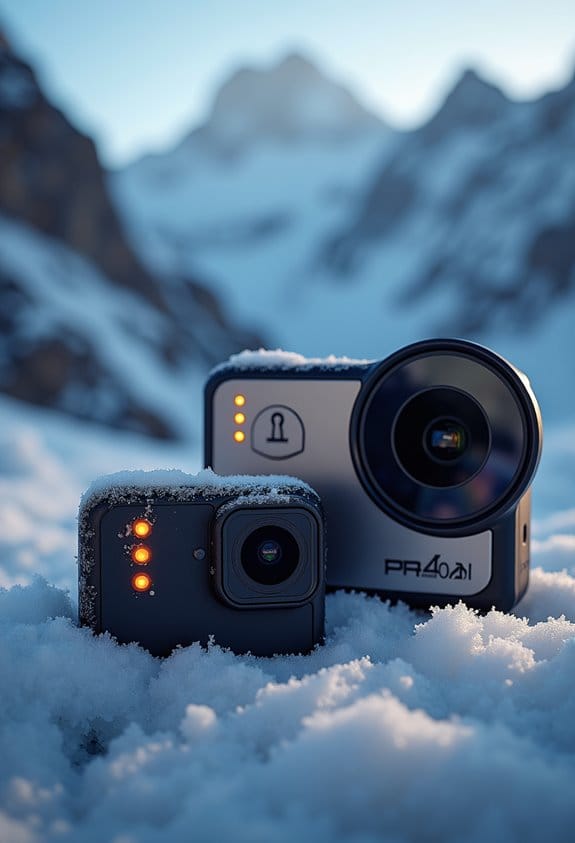
Action Camera Battery Life: Why Cold Weather Drains Power (And Fixes)

Cold weather markedly reduces action camera battery performance by slowing chemical reactions in lithium-ion batteries. Battery life depletes rapidly in freezing temperatures, potentially leading to permanent damage when charging below 32°F. To avoid issues, keep spare batteries warm in insulated pockets, use hand warmers, and regularly swap them during shoots. Adjust camera settings to conserve energy, such as turning off Wi-Fi and lowering resolution. Follow these guidelines to enhance battery longevity and explore more efficient techniques for winter shooting conditions.
Key Takeaways
- Cold temperatures slow chemical reactions in lithium-ion batteries, leading to faster depletion and reduced charge retention.
- Charging batteries in temperatures below 32°F can cause irreversible damage, affecting overall performance.
- Signs of battery struggles in cold weather include rapid depletion, unexpected shutdowns, and unresponsive screens.
- To combat cold effects, keep spare batteries warm in insulated pockets or use chemical hand warmers.
- Adjust camera settings to conserve energy by disabling Wi-Fi and using power-saving modes during cold shoots.
How Cold Weather Impacts Your Action Camera Battery Performance

You may be interested


Hey there! So, let’s talk about how cold weather impacts the battery performance of your action camera. When temperatures drop, especially to around -20°F, you’ll notice that your lithium-ion batteries struggle. Basically, the cold slows down the chemical reactions inside the battery, which means it won’t hold a charge as well and may die on you faster than usual.
It’s super important to avoid charging your camera batteries when it’s really cold outside. Charging them below 32°F could actually cause permanent damage. Instead, I recommend using things like chemical hand warmers or simply keeping your spare batteries close to your body to keep them warm. This way, you can help keep their capacity up while shooting in frigid conditions and avoid the frustration of having your camera shut down unexpectedly. Using a protective sleeve can also help maintain battery efficiency by shielding your camera from harsh environmental conditions.
Signs Your Action Camera Battery Is Struggling in the Cold

Hey there! You know, when it comes to action camera batteries, the cold can really throw them off their game. If you notice your battery life running out quicker than usual, it could be a sign it’s struggling in low temperatures. Cold weather affects battery chemistry, which means your camera might shut down unexpectedly or respond sluggishly because it just doesn’t have the power it needs.
For example, have you ever turned on your camera only to find it’s frozen (not in a fun way) or takes ages to start capturing? Those are classic signs that your battery is feeling the chill. Plus, if you see condensation or frost on the lens, you could risk ruining some amazing footage.
To keep your action camera performing at its best in winter, keep an eye on that battery life and consider having a backup battery handy for those cold outings. Staying aware of these signs will help you capture all the winter adventures without a hitch! Remember, proper battery maintenance in cold conditions can help extend battery life and improve performance.
Best Practices for Action Camera Maintenance in Winter Conditions

Taking care of your action camera in winter conditions is really important if you want it to perform at its best and last a long time. The cold can really zap battery life, so here’s a tip: keep your spare batteries warm! You can pop them in insulated pockets or even use hand warmers to keep them toasty. Trust me, rotating your batteries regularly can make a big difference, especially since older batteries tend to lose their charge much faster in freezing temperatures.
Another smart move is to tweak your camera settings to help save battery. For instance, switching to power-saving modes can really stretch out your battery life. And don’t forget to turn off Wi-Fi and GPS when you’re not using them; those features can drain energy pretty quickly. Also, it’s a good idea to give your gear some seasonal TLC—check your battery capacity and make sure everything’s charged up before heading out into the cold.
You might even try using battery warmers or some insulation techniques to give those batteries a little extra help when it’s frigid out. Taking these steps can keep your gear running smoothly and extend its lifespan. With your camera ready to go, you’ll be all set for capturing those stunning winter adventures! For longer outings, consider carrying a high-capacity portable charger to ensure your camera stays powered throughout the day.
Effective Strategies to Keep Your Camera Battery Warm

Hey there! So, if you’re planning to take your camera out in the cold, one of the biggest worries is keeping those camera batteries warm and functional. You definitely want to avoid that dreaded cold drain, right? A simple trick is to keep your spare battery packs in your warm pockets or against your body. This way, they’ll stay cozy and ready to go when you need them.
Another handy tip is to use chemical hand warmers. They’re amazing at holding heat—even in super low temps like -40°F. Just toss a couple in your camera bag or backpack to give your batteries a little extra warmth during outdoor shoots. And don’t forget about insulation wraps or thermal sleeves; they really help shield your batteries from the chill, keeping them working longer.
Also, try to swap out your batteries regularly while you’re shooting. This ensures that at least one is always warm and ready for action. And if you’ve got a USB-powered charger, bring it along too! It’s a great way to make sure your batteries stay warm and charged, especially on longer outings. Additionally, using a rubber camera case can protect your equipment against extreme weather conditions while providing durability and easy access.
By using these strategies, you can keep your gear performing at its best even in the coldest conditions. Now, let’s talk about how to care for your camera equipment during winter shoots.
How to Optimize Battery Life During Cold Weather Shooting

Hey there! If you’re planning to take your photography gear out into the cold, you’ll want to think about how to optimize battery life. Cold weather can really drain your batteries faster than you’d expect. So, first things first: invest in high-quality, cold-rated batteries. These work a lot better than standard ones when the temperature drops.
A little pro tip? Keep your spare batteries in your warm pockets. You could even pack some chemical hand warmers to give those batteries a little extra warmth while you’re shooting. It can make a big difference! And remember to swap out your batteries every so often; keeping an eye on how they’re performing helps you avoid any nasty surprises.
Also, try adjusting some settings on your camera. Switch off Wi-Fi and lower the resolution when you can. This simple action can really conserve energy and help stretch your battery life a bit longer during those chilly sessions. Insulating your battery compartment or using a battery warmer can give you an extra boost, too. For optimal cold weather performance, consider choosing batteries like the TELESIN Enduro Batteries, which are designed to function well in extreme low temperatures.
Frequently Asked Questions
Why Does My Battery Keep Dying in Cold Weather?
The battery keeps dying in cold weather due to decreased battery performance. Cold temperatures hinder energy consumption in lithium batteries, leading to rapid depletion, especially during winter shooting activities, resulting in devices shutting down unexpectedly.
Why Does My Gopro Die so Fast in the Cold?
The GoPro’s battery life falters dramatically in cold weather, limiting filming in winter. Temperature impacts its performance, requiring maintenance tips like keeping batteries warm and swapping them frequently to combat the chilling effects on usage time.
Does Cold Weather Affect Camera Batteries?
Cold weather considerably affects camera battery performance, particularly with lithium-ion cells. In low temperatures, energy consumption increases, leading to quicker depletion during shooting conditions, ultimately diminishing battery life and efficiency for photographers in chilly environments.
How Do I Stop My Camera From Draining My Battery?
In the domain of photography, a knight’s equipment often falters under harsh conditions. Battery maintenance tips, like using portable charger options, enhancing camera settings, or employing insulating battery jackets, guarantee the knight’s quest remains uninterrupted, even in ideal storage temperature challenges.


