As an Amazon Associate, we earn from qualifying purchases. Some links on this site are affiliate links at no extra cost to you. Our recommendations are based on thorough research and editorial judgment.


Filming in Rain and Mist: How to Keep the Lens Clear

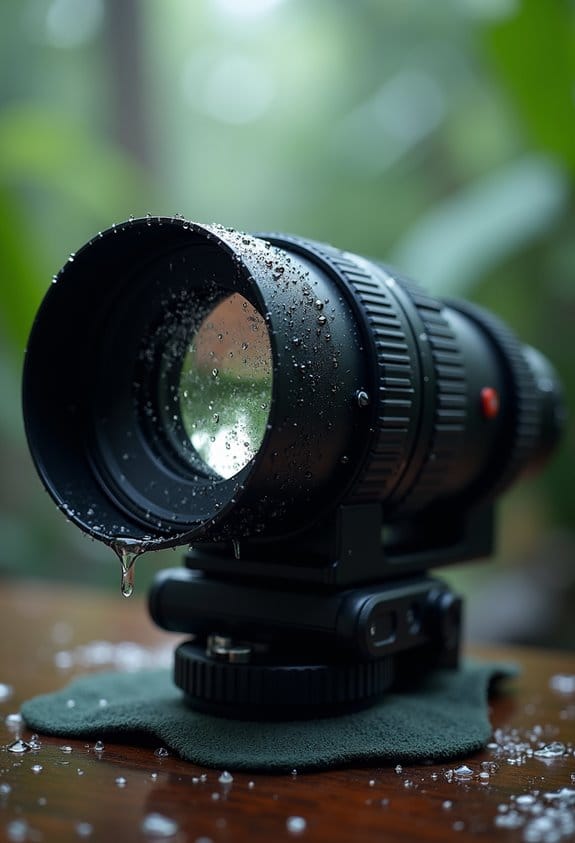
To keep the lens clear while filming in rain and mist, use a lens hood to prevent droplets from settling on the glass. A microfiber cloth should be kept handy for immediate cleaning. Employ weather-sealed equipment and consider using rain covers or waterproof bags. Filters can reduce glare and enhance colors. Maintain visibility by using rain jackets and waterproof casings with anti-fog inserts. These essential techniques can help guarantee high image quality and clarity, leading to better results. More insights follow.
Key Takeaways
- Carry a microfiber cloth or lens cleaning solution to frequently wipe the lens and ensure clarity.
- Use a lens hood to shield against raindrops and minimize glare during filming.
- Consider weather-sealed cameras and lenses, or rain covers to protect your gear from moisture.
- Employ makeshift covers, like shower caps or plastic bags, for quick protection against unexpected rain.
- Utilize ND or CPL filters to enhance colors and reduce glare in wet conditions.
Challenges of Shooting in Rain and Mist: Understanding the Obstacles
You may be interested


Shooting in rain and mist can be quite a challenge! As a photographer, you really have to be ready to tackle a few tricky obstacles that can mess with both your camera gear and the quality of your photos. For instance, when those raindrops start to gather on your lens, it can quickly blur your view and ruin that perfect shot. A simple fix is to carry a microfiber cloth or some lens cleaning solution. Just make it a habit to wipe off any moisture that builds up as you shoot.
And let’s not forget about the wind, which often blows in right alongside the rain. It can send droplets flying directly onto your lens, making it even tougher to get that clear shot. That’s why I always recommend using weather-resistant gear or investing in a rain cover for your camera. It’s a small precaution that can go a long way in keeping your equipment safe.
With a few solid strategies in your back pocket, you can still capture some amazing images, even in the most challenging conditions. So, the next time you find yourself out in the rain or mist, just remember: a little preparation can help you create stunning photos while keeping your gear protected. And speaking of overcoming challenges, let’s explore how to make the most of natural light in tricky weather next! Using protective housings with anti-fog inserts can also be highly effective in maintaining lens clarity during moist conditions.
Must-Have Gear to Shield Your Camera From Rain

Hey there! If you’re planning to shoot in the rain, having the right gear to shield your camera from moisture is super important. First off, think about investing in a weather-sealed camera and lens. This means they’re built to handle wet conditions better, so you won’t need to worry as much about damage.
Along with that, I’d recommend getting a rain cover or waterproof housing. These can be pretty affordable, usually ranging from $5 to $20, and they act like a protective shield for your camera. Plus, adding a lens hood can really help; it prevents raindrops from splattering directly on your lens, which keeps your shots clear.
If you ever find yourself without fancy gear, don’t sweat it! You can use a simple shower cap or even a zippered freezer bag as a makeshift rain cover. Just make sure to keep a microfiber cloth handy too; it’s perfect for drying off any raindrops that do land on your camera. With these simple tips, you can enjoy capturing those rainy moments without the fear of ruining your equipment. Ready to grab your gear and get shooting?
For added protection, consider a case with IP67 waterproof rating to ensure your camera stays safe even in the heaviest downpours.
Utilizing a Lens Hood for Optimal Protection

Hey there! So, let’s chat about something that can really make a difference when you’re out shooting in tricky weather—like using a lens hood. A lens hood isn’t just a cool accessory; it actually helps in a couple of important ways. First off, it blocks unwanted light, which means less lens flare and better image quality. Plus, if you’re caught in a light drizzle or some mist, the hood acts like a shield, keeping those pesky raindrops from landing directly on your lens.
Imagine you’re capturing a stunning landscape, and suddenly the clouds roll in. With a lens hood in place, you can still get those vibrant colors without the distraction of reflections from water droplets. It adds extra coverage, so even if you’re moving around a bit, it deflects splashes that could compromise your shot.
This little piece of gear is an affordable way to protect your camera, but pairing it with other protective techniques—like a rain cover—can give you the best results. Using durable materials, such as ABS for camera protection, can further enhance your gear’s resilience in challenging conditions. So, next time you step out with your camera, don’t forget the lens hood; it’s a small, but mighty tool that can really enhance your shooting experience! Speaking of which, let’s talk about other gear you might want to consider for those adventurous photography outings.
How Waterproof Cases and Sleeves Protect Your Camera

Hey there! If you’re taking your camera out in rainy weather, protecting it from moisture is super important to keep it working well. That’s where waterproof cases and sleeves come into play. They help shield your camera and lens from water exposure, so you don’t have to worry as much about damaging those sensitive internal parts.
For instance, if you’re out shooting in light rain, using something like the OpTech Rain Sleeves can be a lifesaver. They’re lightweight and easy to slip into your camera bag, making it simple to grab and use anytime the weather turns. Yes, you might find some of your camera buttons are a bit harder to access, but many of these cases have clear panels that let you tweak your settings while keeping the moisture out.
If you know you’ll be in heavy rain or doing something adventurous, like shooting near the ocean, it might be worth looking into dedicated waterproof housings. These are specially designed to keep your camera completely dry, ensuring it stays fully functional even in the wettest conditions. And once you’re equipped with the right protection, you can feel more confident exploring the outdoors, no matter the weather!
Make sure to check for waterproof depth ratings when selecting a case to guarantee the best protection for your shooting environment.
Practical Tips for Lens Care in Rain Photography

Hey! If you’re heading out for some rain photography, keeping your lens clear is super important. To do that, one of the first things I recommend is using a lens hood. It helps to deflect those pesky raindrops and keeps glare to a minimum, which means your images will stay nice and sharp.
Now, when it’s pouring and you’ve got moisture settling on your lens, having a good microfiber cloth or lens wipes handy can save the day. Just a quick wipe can remove any water spots or smudges, letting you capture those stunning shots without any distractions. Oh, and consider using a protective filter too; it’s not just great for dealing with splashes, but it makes cleaning much easier, keeping your original lens safe from scratches.
Don’t forget to keep your camera dry while you’re shooting! A simple rain cover or even a plastic bag can do wonders when you’re not using your gear. Make it a habit to check your lens often during your shoot. Just a quick wipe here and there can make a real difference in visibility and photo quality. Using lithium batteries in your camera can ensure longer shoot times even in challenging weather conditions, so you don’t miss any important moments.
Unique Photography Techniques in Rain and Mist
Hey there! You know how rain and mist can create these dreamy, mystical visuals in photographs? If you want to capture that unique atmosphere, it’s all about knowing how to work with the conditions. For instance, your camera settings are key—you might want to bump up the ISO for better low-light performance or go for a slower shutter speed to let more light in.
Don’t be afraid to get a little creative, too! Try shooting from a lower angle to catch interesting reflections in puddles. This simple trick can really add a sense of depth and intrigue to your photos. Plus, using an umbrella as a prop is a fun idea—it keeps you and your gear dry while adding a splash of color or shape to the frame. Just remember to attach a lens hood to your camera. It acts like a shield against raindrops, helping to maintain the clarity of your shots.
Using specialized ND and CPL filters can also greatly improve your footage by reducing glare and enhancing colors in wet conditions.
With these techniques, you’ll find that even the most challenging weather can lead to stunning results. Plus, experimenting with your setup can yield some surprising, beautiful images. So, if you’re ready to embrace the elements, let’s talk next about how to find the perfect location for your rainy-day shoot!
Impact of Weather on Image Quality
Hey there! Have you ever thought about how much weather can influence image quality when filming? It’s incredible—especially when it’s raining or there’s a lot of mist in the air. For instance, when raindrops land on your lens, they can create those annoying water spots that really mess with your shot. To help with that, consider using a lens hood; it helps keep those pesky drops at bay, making sure your visuals stay crisp.
Another smart move is to attach a clear protection filter on your lens. This little piece of gear acts like a shield against rain splashes and dirt, which can enhance your overall image sharpness. Plus, when humidity rises and mist sets in, your equipment can get foggy due to condensation. To prevent this, make sure you have waterproof casings and rain covers handy. They’re really crucial for minimizing the risk of moisture damage to your gear.
Keeping your equipment safe is key to getting the best image quality, even when the weather doesn’t cooperate. Ultimately, being prepared will help you maintain your vision and capture those stunning shots, no matter what nature throws at you! Speaking of preparation, let’s chat about some essential gear you might want to consider for your next shoot. Using waterproof cases with anti-fog inserts can be especially effective in maintaining clear visibility during humid or misty conditions.
Community Experiences: Tips From Fellow Photographers
Hey there! If you’re a photographer looking to take stunning shots in tricky weather like rain or mist, I’ve got some tips that can really help. One of the simplest ways to protect your camera is to use a shower cap or a plastic bag. Just slip it over your camera when you’re not shooting, and it keeps the moisture out while still letting you access your lens when you’re ready to snap some photos.
Let’s face it—raindrops on your lens can ruin a great shot. So, always keep a microfiber cloth nearby to quickly wipe any drops off. I also suggest carrying a small umbrella. Not only does it protect you, but it shields your gear too! If you want to take it a step further, consider investing in a rain jacket specifically designed for cameras. They’re super handy and allow you to adjust your settings without exposing your camera to the elements. Plus, using a lens hood can help minimize the rain hitting your lens and reduce glare too!
With these practical tips, you’ll find that shooting in challenging conditions can actually be fun, and you might come away with some unique images that others might miss when they stay indoors. Now, let’s chat about some post-processing techniques to enhance those rainy day captures! Additionally, using a waterproof wireless remote can help you control your camera without exposing it to wet conditions, making outdoor shooting much easier.
Frequently Asked Questions
How to Protect Your Camera While Shooting in the Rain?
To protect a camera while shooting in the rain, utilize camera covers and leverage weather seals. Additionally, employing lens hoods and angling the camera downwards can further minimize exposure to moisture during wet conditions.
How to Prevent Camera Lens From Fogging in Humidity?
To prevent camera lens fogging in humidity, one should employ lens anti-fogging techniques such as using sprays, maintaining dry storage, and utilizing lens warmers, ensuring consistent humidity camera care for ideal shooting conditions.
How to Clean Camera Lens From Rain?
To clean a camera lens affected by rain, use a microfiber cloth for gentle lens cleaning. Employ rain protection measures, like a lens hood or rain cover, to minimize moisture and reduce cleaning frequency.
How to Film When It’s Raining?
In rainy conditions, a filmmaker dances with droplets, making quick adjustments to their gear. A steadfast umbrella shields the camera, while lens hoods ward off moisture, preserving the artistry captured amidst nature’s tempestuous embrace.


